
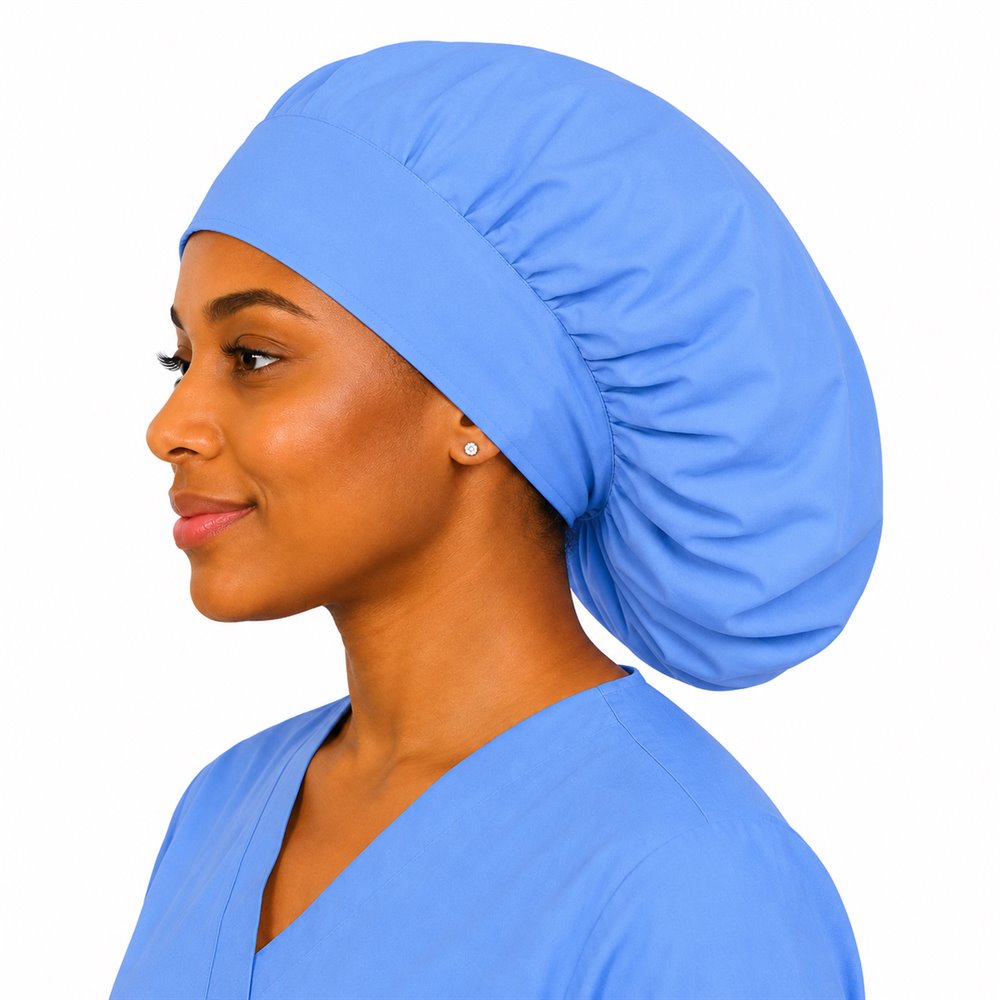
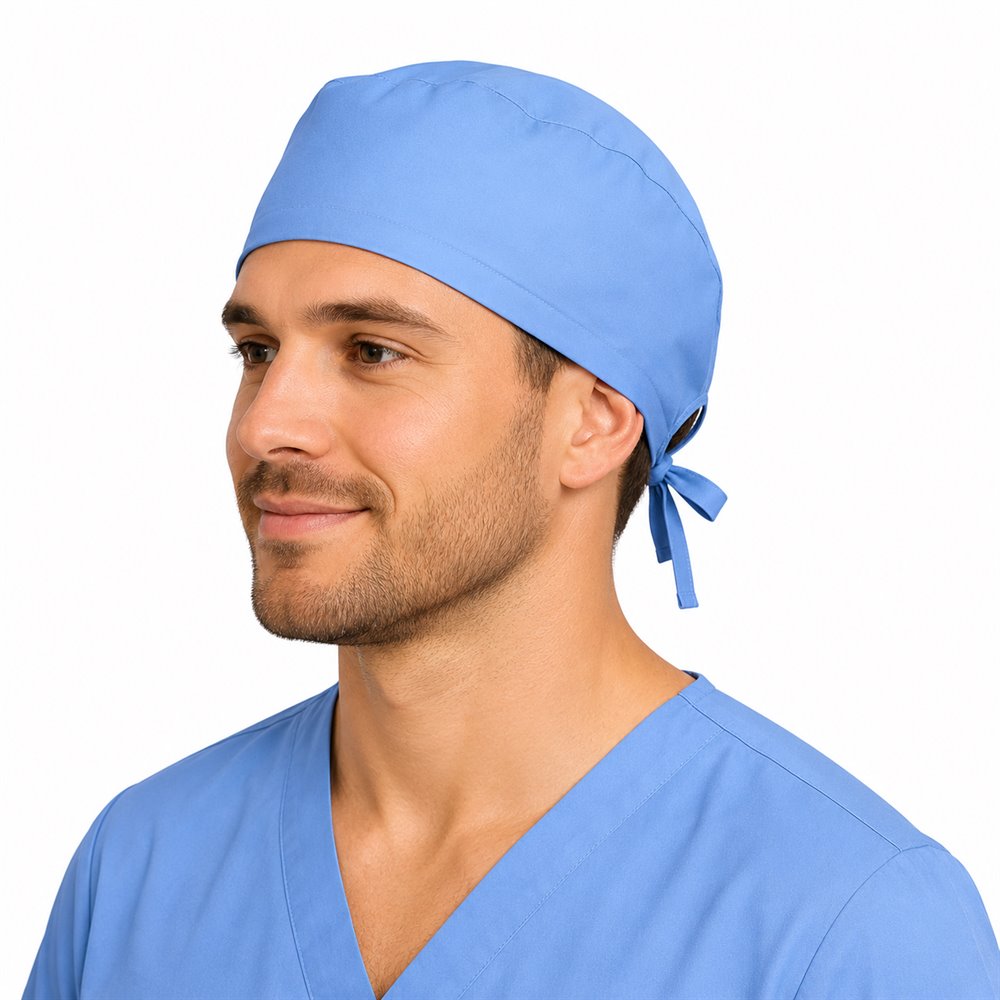
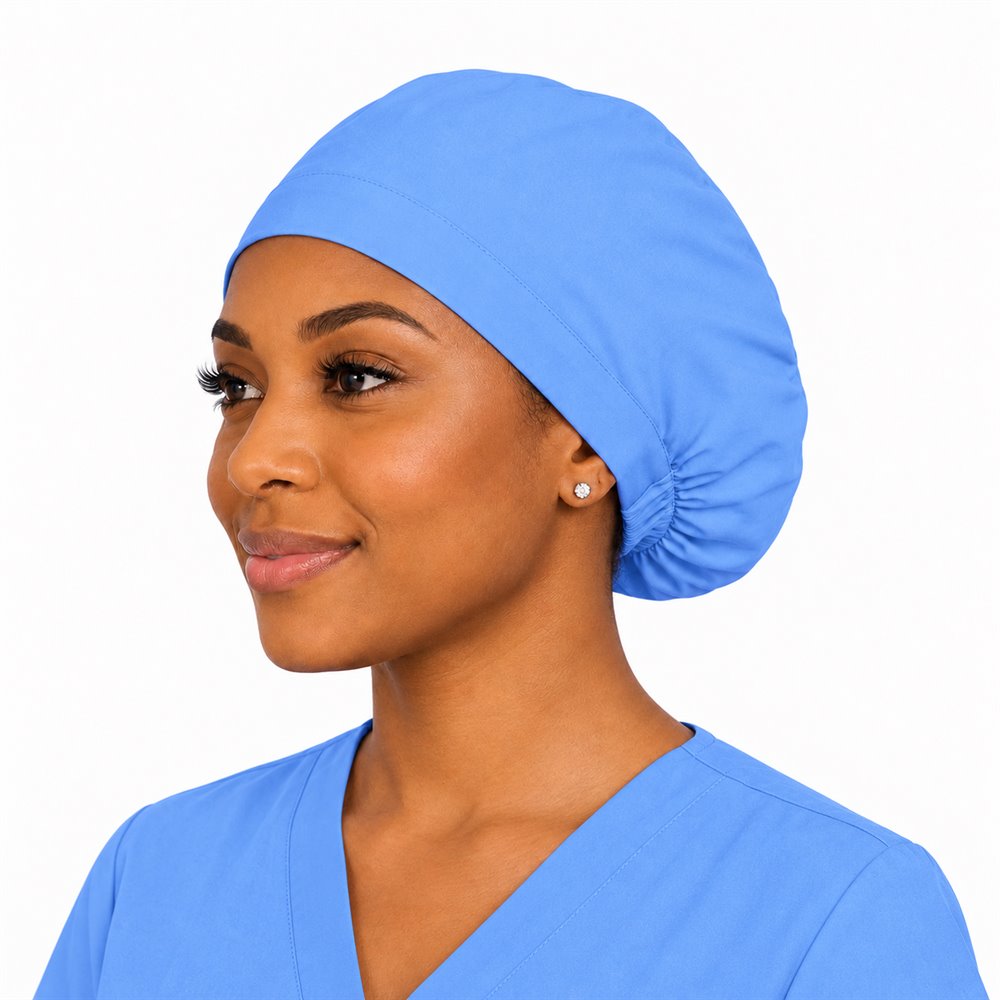
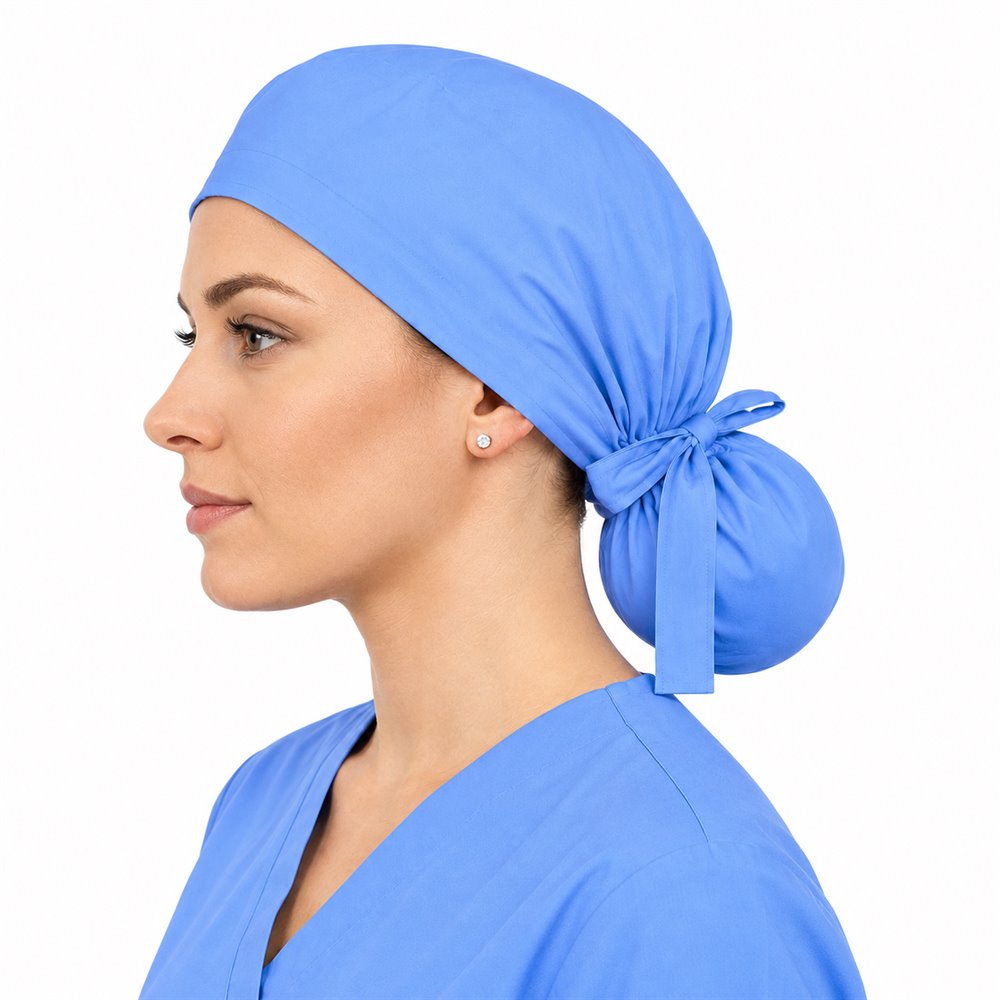




If you've ever pulled off your scrub cap after a 12-hour shift and wondered why your hair looks — and feels — like it went through a dryer cycle, you're not alone. For nurses, surgeons, doctors, dentists, CNAs, and anyone who spends long hours in a cap, hair damage is an occupational reality that rarely gets talked about.
That's changing. More and more healthcare professionals are making the switch to satin-lined surgical caps, and for good reason.
The Problem with Standard Scrub Caps
Most traditional scrub caps are made from cotton or polyester blends — fabrics that are functional for the OR but hard on your hair. Here's what's happening under the surface:
- Friction: Rougher fabric fibers snag the hair shaft with every movement, causing frizz and breakage over time.
- Moisture absorption: Cotton is highly absorbent. Worn for hours, it draws moisture directly from your hair, leaving it dry and brittle.
- Compression: A snug cap worn for an entire shift creates consistent pressure, disrupting hair at the root and flattening styles.
One shift might not feel like much. But multiply that across a 36-hour work week, year after year, and the cumulative damage adds up.
What a Satin Lining Actually Does
Satin is a weave — smooth, low-friction, and non-absorbent. When it lines the inside of a surgical cap, it creates a protective barrier between your hair and the outer fabric. The benefits are practical and immediate:
- Reduces frizz by minimizing friction against the hair cuticle
- Retains moisture so your hair stays hydrated through a full shift
- Decreases breakage by allowing hair to move smoothly rather than catching on rough fibers
- Protects styles so your blowout, braids, or twist-out look more like themselves when you clock out
And because the satin is on the inside, the outside of the cap still meets OR and clinical dress code standards.
Hair Care Tips for Your Shift
Switching to a satin-lined cap is the single biggest upgrade you can make, but a few habits help maximize results:
Before your shift:
- Apply a lightweight leave-in or hair oil to lock in moisture before putting your cap on
- Choose a low-manipulation style — a loose bun, braid, or twist holds up well under a cap all day
During your shift:
- Avoid constantly adjusting or pulling your cap off and on; each removal creates friction
- If you have a break, give your scalp a gentle massage to stimulate circulation
After your shift:
- Refresh with a light mist of water or a hydrating spray
- Avoid tight styling immediately after — give your hair a few minutes to breathe
Finding the Right Satin-Lined Surgical Cap
At Athena Medical Headwear, every surgical cap is satin-lined — designed specifically with healthcare professionals in mind, by a nurse who lived the problem firsthand.
Browse styles that work as hard as you do:
Your Hair Deserves Protection Too
You spend your shifts protecting others. A satin-lined surgical cap is a simple, affordable way to protect yourself — starting with your hair.